How to Brief Your Board on Grants You Plan to Pursue
Most grant updates to boards sound like this:
"We're working on a few grants."
That's not very helpful.
A strong board briefing turns that into something clear, strategic, and trackable.
Start with your pipeline
Before you brief your board, you need a clear view of what you're working on.
Your pipeline should show:
- which foundations you are pursuing
- how much you plan to request
- where each opportunity stands
- what the next step is
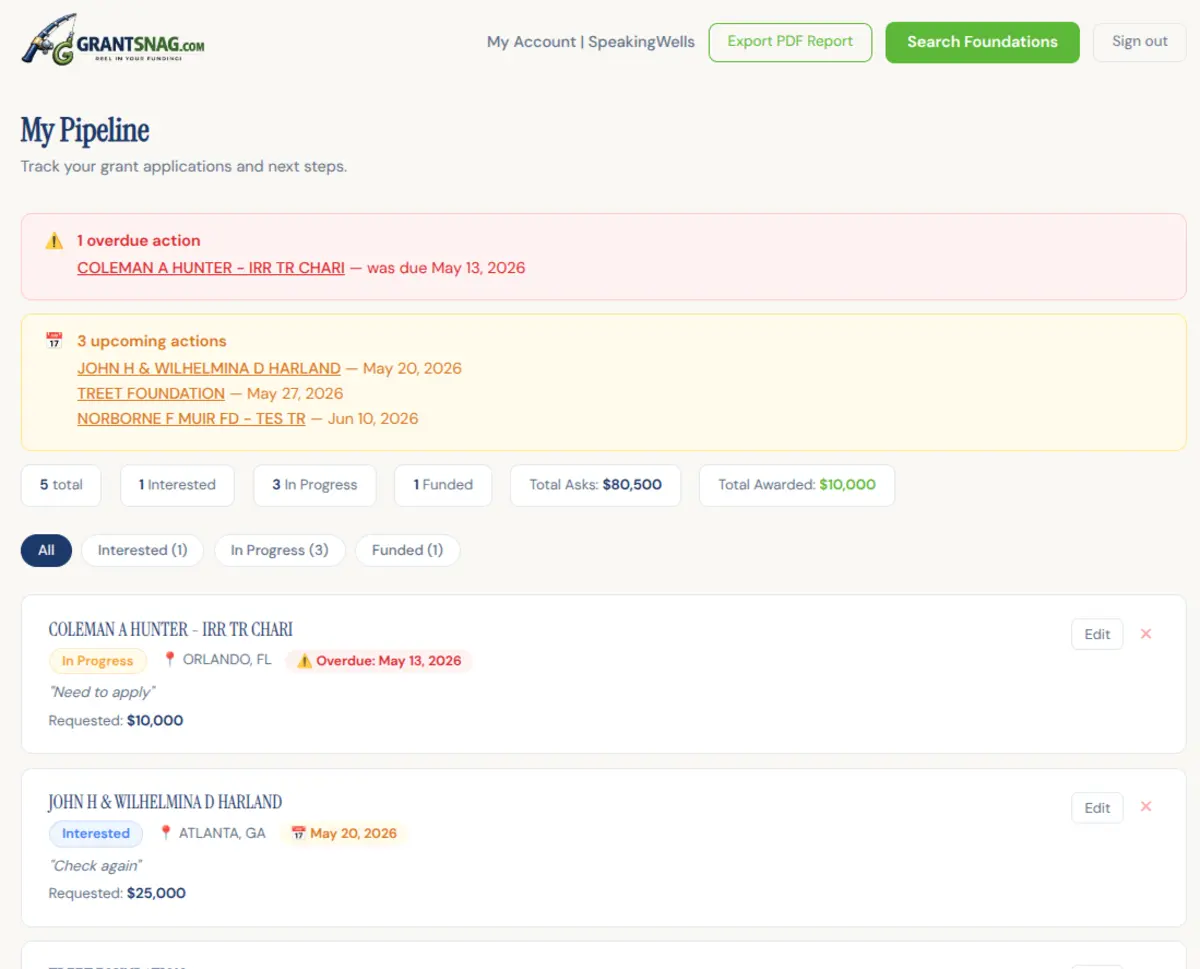
This turns scattered work into a plan.
Show the big picture
Start with a quick summary:
- total potential funding
- number of funders
- what's in progress
- what's already been funded
This answers the board's main question:
"What are we working toward?"
Highlight a few key opportunities
Don't walk through everything.
Pick 2–3 examples and explain:
- who the funder is
- why they're a good fit
- how much you're requesting
- what happens next
This shows intention, not just activity.
Explain why these funders
This is where you build trust.
You might say:
- these funders already support organizations like ours
- their giving aligns with our work
- the ask matches their typical grant size
Now it's not guesswork, it's strategy.
Look for board connections
This is one of the most overlooked steps.
As you review each funder, ask:
- Does anyone on the board know someone at this foundation?
- Has anyone had past interaction with them?
A warm introduction can significantly increase your chances.
Even one connection can change the outcome.
Be clear about next steps
Let your board know what's happening next and when:
- upcoming applications
- planned outreach
- LOIs being drafted
This shows momentum and accountability.
Use a simple report
End with a clean pipeline report.
You can use the "Export PDF Report" button at the top of your GrantSnag pipeline to create the perfect briefing image.
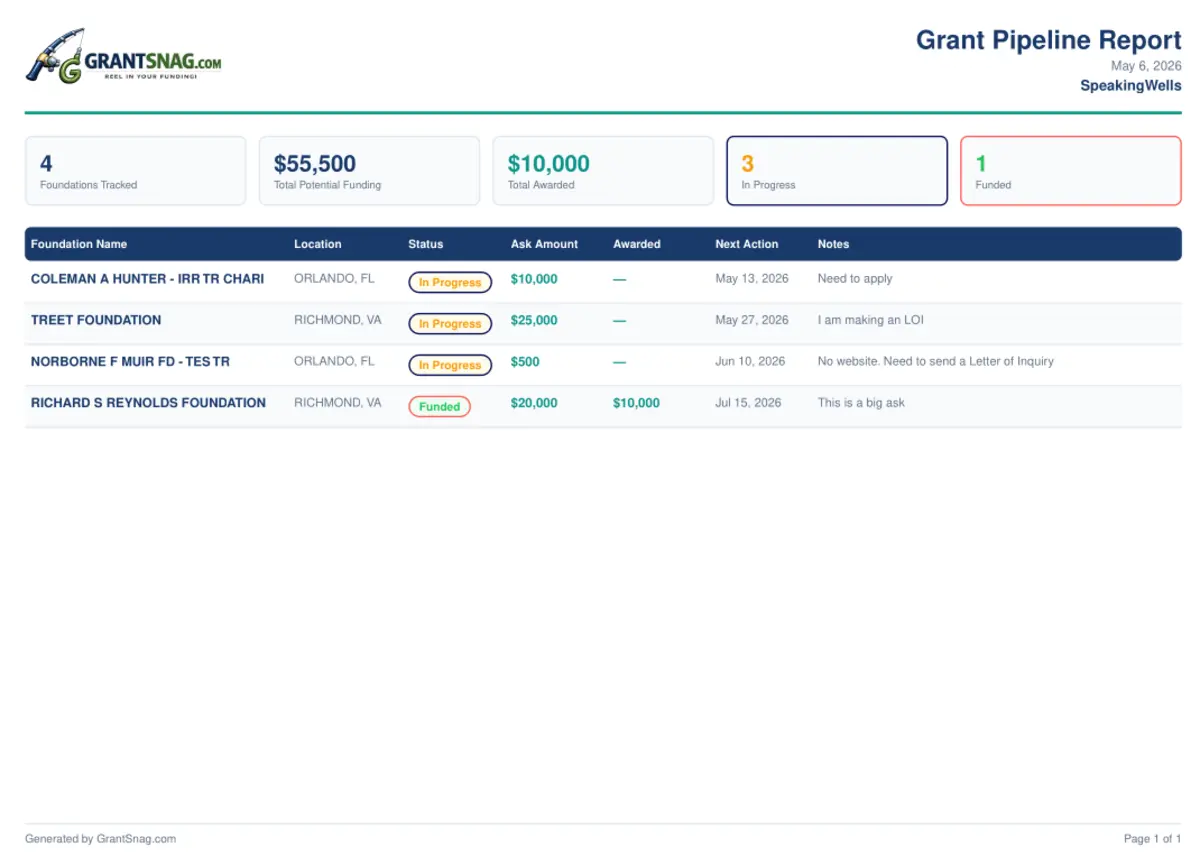
This gives your board:
- a clear snapshot
- something to reference
- confidence in your process
Final thought
The goal isn't to show how busy you are.
It's to show where you're going.
A good pipeline turns:
"We're working on grants"
into:
"Here's our plan, and here's what happens next."